
Understanding the Teknion Figure Table Collection
The Evolution of the Modern Meeting Table
In today’s workplace, furniture is no longer just functional, it’s strategic. Conference tables now serve as hubs for collaboration, hybrid meetings, brainstorming sessions, and leadership discussions. The design of a meeting table influences how people interact with each other and with technology. The Figure collection by Teknion, designed by Alyssa Coletti, reflects this shift. The series focuses on warmth, collaboration, and adaptable design while highlighting the natural beauty of wood materials. Design Philosophy: Warm, Human-Centered Workspaces The Figure collection was created to make professional environments feel more welcoming and less rigid than traditional boardroom furniture. Several design details reinforce this philosophy: Rounded corners and softened edges reduce the harsh geometry common in traditional conference tables.
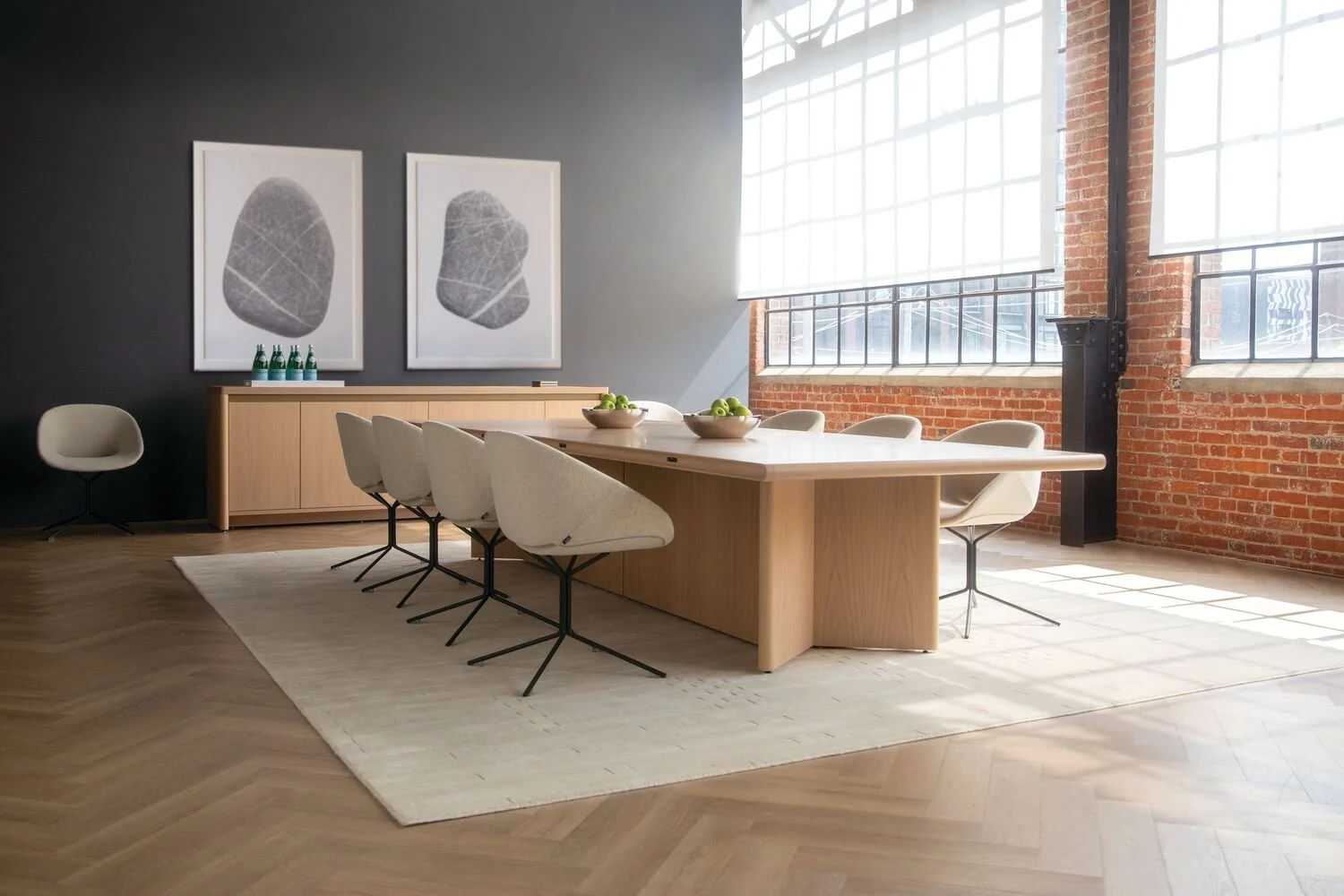
Cove edge profiles add subtle sculptural detail and improve comfort for users seated at the table.
Natural wood materials emphasize warmth and craftsmanship in the workspace.
These elements create a table that feels less like corporate infrastructure and more like thoughtfully crafted furniture. Structural Design and Ergonomics A major challenge in conference table design is balancing structure with user comfort. The Figure system addresses this through several intelligent design strategies.
- Angled Structural Panels Instead of using bulky center pedestals, the table uses diagonally arranged support panels. This design accomplishes three things: Creates more legroom for people sitting around the table.
Improves structural stability without large obstructions.
Allows for a more visually lightweight appearance.
- Integrated Technology Modern conference spaces rely heavily on power and connectivity. The Figure tables integrate power modules that follow the curvature of the table edge, allowing them to blend seamlessly into the surface. This reduces visual clutter while ensuring easy access to power for laptops, devices, and collaboration tools.
Modularity and Scalability
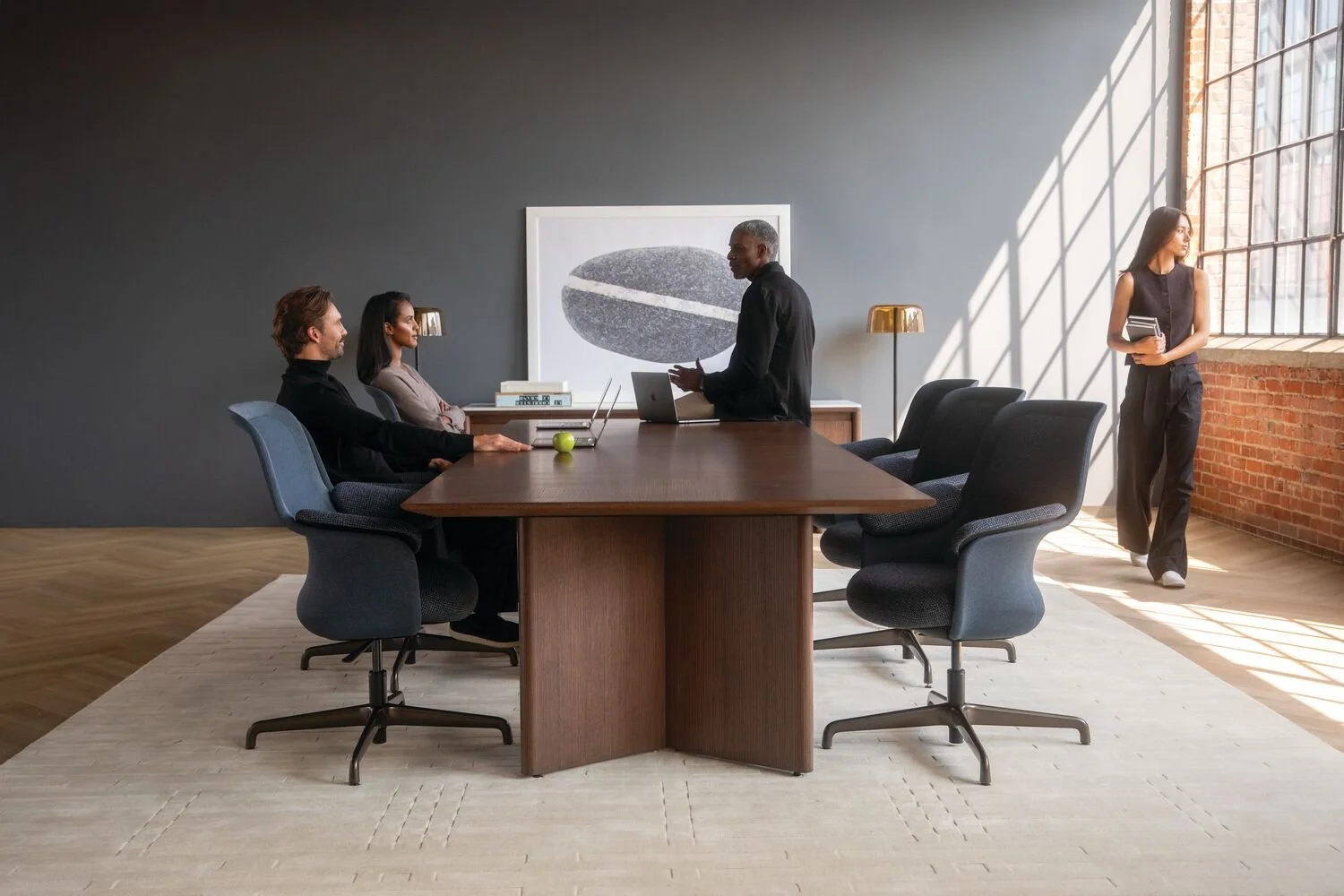
One of the most important characteristics of contemporary workplace furniture is flexibility. The Figure collection offers multiple base styles, various table shapes, and different sizes and surface formats.
These options allow the system to scale from small meeting rooms to large boardrooms or collaborative workspaces. This modular approach makes the furniture adaptable to evolving workplace needs—a critical factor as organizations transition between hybrid, collaborative, and focused work environments.
Expanding the Collection
The Figure system is not limited to conference tables. The collection also includes complementary furniture pieces designed to support cohesive meeting environments. Examples include sideboards, credenzas, and storage components designed for meeting rooms and executive spaces
These pieces help create a unified aesthetic across an entire meeting or executive suite. Furniture design plays a direct role in workplace behavior. When a meeting table is thoughtfully designed, it can influence:
Collaboration – Comfortable seating and legroom encourage longer, more productive discussions.
Technology integration – Built-in power supports digital collaboration tools.
Spatial perception – Warm materials and softer forms reduce the intimidating feel of traditional boardrooms.
Designers increasingly view furniture as part of the experience architecture of the workplace rather than simply equipment.
The Teknion Figure collection demonstrates how modern workplace furniture blends design, ergonomics, and technology integration. Soft geometry can make professional spaces feel more human. Structural innovation can improve comfort and aesthetics simultaneously. Integrated technology is essential for modern collaboration. Modular furniture systems help organizations adapt to changing work styles.
In short, furniture like the Figure collection represents a broader shift in workplace design—one where craftsmanship, flexibility, and user experience drive the future of office environments.